

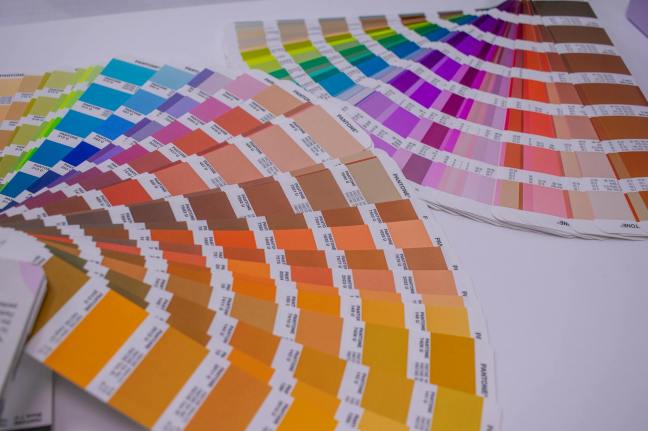
Pantone’s introduction of the Matching System (PMS) in the 1960s transformed industries like graphic design, fashion, and printing. It provided a reliable way to reproduce colors across different materials and locations. This ensured consistency and reduced ambiguity.
Consistency is Pantone’s most outstanding achievement. For global brands, color is identity: Coca-Cola’s red or Tiffany’s blue must look the same everywhere. PMS guarantees this precision, making Pantone the industry standard for color communication.
Monetisation
Pantone’s genius lies not only in standardization but in monetization. The company generates revenue through:
- Swatch books and guides: Physical color libraries sold to designers and printers.
- Digital platforms: Subscriptions to Pantone Connect, offering access to over 15,000 colors.
- Licensing: Pantone licenses its brand to products ranging from mugs to apparel, capitalizing on its cultural cachet.
- Color of the Year campaigns: Annual announcements drive global marketing buzz, influencing fashion, interiors, and branding trends.
Critics see this as ‘greedy’ because designers need to buy updated guides and digital access regularly. Pantone’s control over the colour ecosystem guarantees ongoing revenue. It maintains its industry dominance.
Conclusion
By transforming color into a standardized global language, Pantone solved a fundamental problem of consistency. Its clever packaging and licensing strategies empower professionals and turn color into a thriving business. Pantone’s PMS is not just a design tool. It’s a business empire built on the universal need for color precision. This inspires confidence in its leadership in the industry.
 Creative Experiments and More
Brilliant. This is such an eye-opener for me. I didn’t know about PMS.
‘ Its clever packaging and licensing strategies empower professionals and turn color into a thriving business.’
LikeLiked by 1 person
Somebody in the US had patented turmeric for its medicinal benefits, and we have grown up with it without monetising it.
Business is about monetisation of knowledge, talent, systems and uniqueness. All of us possess a little of all this, but are unable to scale it up
LikeLiked by 1 person
So true. After reading your posts, I realize my ignorance in many subjects. This is the truth, not false modesty.
LikeLiked by 1 person
🙏🙏
LikeLike
Thanks for sharing your thoughts Reena and pointing out the need to be extremely precise in color selection. Pantone makes significant money on color by selling the promise of perfect, consistent color reproduction through their proprietary, trademarked system, not just ink; they leverage intellectual property, high-quality physical guides, and crucial industry standardization (used for branding).
LikeLiked by 1 person
Thank you, Jim!
LikeLiked by 1 person
This is a sharp, well-structured piece that captures both the practical brilliance and the business strategy behind Pantone’s success. I appreciate how clearly you explain the impact of PMS, the monetisation model, and why Pantone remains influential. Your conclusion ties it all together with clarity and insight. Well done!
LikeLiked by 1 person
Thank you!
LikeLiked by 1 person