

Bollywood is a copycat nickname given by Hollywood fans to the Indian film industry based in the city of Bombay.
PLAYBACK SINGING IN BOLLYWOOD
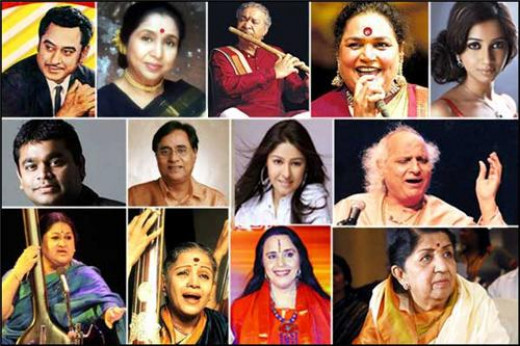
Music has been the lifeblood of Indian movies for a long time. Actors are not expected to be singers as well, so the concept of playback singing has existed since the beginning. The playback singers to whose voices actors lip-sync their songs are celebrities in their own right.
This is unlike the ghost-singing in Hollywood, where the identity of the singers was not revealed, giving full credit to the actor. (This reminds me of ghost-writing, which hasn’t got its due so far).
In contrast, playback singing in India is a celebrated and transparent tradition. It began in 1935 with the film Dhoop Chhaon, where songs were pre-recorded and actors lip-synced on screen. Unlike ghost singers, Indian playback artists like Lata Mangeshkar, Kishore Kumar, and Arijit Singh became household names, often enjoying fame equal to or greater than the actors they voiced.
Playback singing is deeply embedded in Indian cinema’s musical fabric. It’s not just a technical solution—it’s a cultural cornerstone. It is a spotlight, not a veil.
Songs are often released before films, and singers are revered for their emotional expressiveness and vocal range. The industry embraces its visibility, with awards, concerts, and fan followings dedicated to these vocal stars.
The iconic singer, Lata Mangeshkar, recorded 50000 songs in 14 languages in her entire career. She found a place in the Guinness Book of World Records for the same.
Here is a video of an English song recorded by the legendary singer, Lata Mangeshkar.
Another singer called Preeti Batra won awards for a full-length English song in a Hindi movie titled “Julie”.
Unfortunately, she failed to find success in Bollywood, as her name did not pop up as having potential in Hindi songs.
Now, OTT music and radio have built the careers of many singers outside the film industry.
Usha Uthup succeeded in establishing a different style by singing Hindi songs in a Western style, dressed in traditional Indian attire. She was known for her designer Bindis – the decorative art on foreheads. It has existed long before tattoos were revived.
Indan classical music is an entirely different genre.
 Creative Experiments and More
Wow! Interesting, and thank you for sharing, Reena.
LikeLiked by 1 person
Glad you found it interesting.
LikeLiked by 1 person
😊
LikeLiked by 1 person
Indian singers are legendary! Even my father was a fan and so is my husband.
LikeLiked by 1 person
The different genres provide a platform for every kind of talent. We need to be careful what we are listening to, as it impacts the mindset by seeping into our system imperceptibly.
LikeLiked by 1 person
So true. I usually used to listen to English music/ songs but my grandson made a valid point about reading the lyrics first- now I only listen to a few select songs and nasheeds ( hamd and naats)
LikeLike
Incidentally, Ange introduced us to a site called suno.com which converts your poem to a song with music. I’m yet to figure out how it works.
LikeLiked by 1 person
Yes, Lesley also uses it.
LikeLiked by 1 person
I have watched some Bollywood movies and although I felt the stories were weak, the dancing and the music was always lively. This was very interesting to read about the singers behind the seen in the movies and the videos you inserted were wonderful. Thanks for joining in again, Reena.
LikeLiked by 1 person
Thank you, Jim! Glad you enjoyed the videos.
LikeLiked by 1 person
Interesting
LikeLiked by 1 person
Thanks, Caleb!
LikeLiked by 1 person
Very nice
LikeLiked by 1 person
🙏🙏
LikeLiked by 1 person