

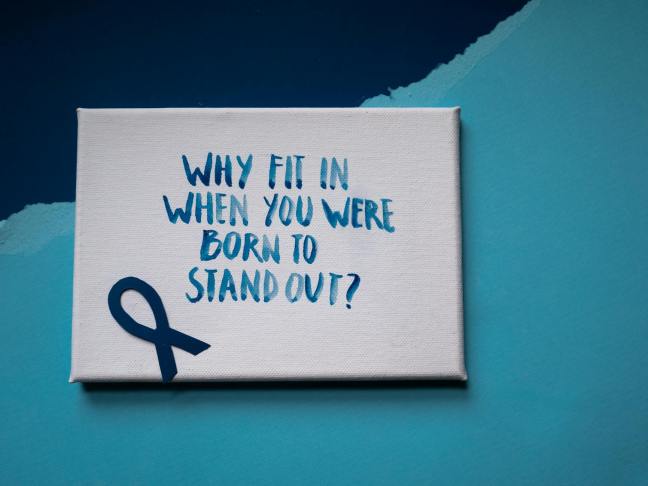
If normal is being like everyone else, I’d not like to be normal.
As I make this declaration, I’m acutely aware of the paradox it presents. Life, to a significant extent, is about conforming to societal norms. I work during the day, sleep at night, eat food cooked with the same ingredients that everybody else uses, dress in the same way, and read the same textbooks in the same universities that everybody else has studied in. Yet, there’s a part of me that resists this conformity, that yearns to express my individuality in the small acts that differentiate me from others.
So, normalcy or the lack of it, is measured by the small acts we do to express individuality. These acts could be as simple as choosing a unique outfit, pursuing a hobby that’s not mainstream, or having a different perspective on a common issue. It is these small parts of life that differentiate us from others.
THE GENERATION GAP
Changes in social norms are the primary cause of a generation gap. This gap is not just about age, but also about the difference in what is considered ‘normal’ in different eras. Yet, the next generation follows a set of peer group norms. So, normal is being redefined. The only difference is that the youth refer to the old as ‘outdated’ rather than ‘abnormal’. A senior who keeps up with the times may be seen as ‘progressive’. Here, we are moving in a linear fashion where normalcy evolves gradually.
LATERAL NORMALCY
Rebels, those who refuse to conform, have the potential to become thinkers, philosophers, activists, revolutionaries, or even criminals. Their actions, their refusal to accept the status quo, can be the catalyst for change. The true litmus test for normalcy should be its impact on society at large, and rebels often play a crucial role in this evaluation.
Here, we evaluate behaviour norms within the same country, generation, culture, profession, business or group.
INDIVIDUALITY
Individuality is a dirty word in cultures where total allegiance to social norms is expected.
We’ve seen parents disown a child with a different sexuality or rebel mindset for fear of being ostracised by the community. They may secretly empathise with the child. Some parents have sent their errant offspring abroad to escape the disapproving glares.
ACCEPTANCE
The most valuable gift we can give each other is acceptance without judgment or criticism. Our thought processes may differ, but we are all unique individuals. We should strive to give each other the space to be ourselves and to grow without fear of rejection or disapproval.
Here is the link to an article I wrote in 2017 – The New Normal or No Normal.
 Creative Experiments and More
So well said my friend.
LikeLiked by 1 person
Thank you so much!
LikeLiked by 1 person
You’re most welcome 🙏🏼
LikeLiked by 1 person
That’s a very valid point. Unless it’s something criminal, illegal or something that can actually cause damage to self or others, there is nothing wrong with being abnormal. Non-adherence to societal norms shouldn’t be a reason for ostracism indeed.
LikeLiked by 1 person
Thanks for resonating with the spirit! 🙂
LikeLiked by 1 person
Normalcy has a lot to do with everydayness, or is it the other way around where everydayness has even more to do with normalcy.
LikeLiked by 1 person
Everydayness is about routines. But if a writer produces an epic work by making writing his daily routine, s/he still stands above the ordinary.
LikeLiked by 1 person
What about when “being oneself” is evil, or condoning of. I am right there with you. I am finding it especially difficult to live in the world again lately. Then I remember, I am not of this world. Things are going exactly as planned. My eyes need not be fixed on what is going on in the world, or I will be like the majority. The thinkers, the revolutionaries, they’re like everybody else in many ways; intellectually, spiritually, there are a minority who comprise variants not present in the general public.
LikeLiked by 1 person
I like the contention that things are going exactly as planned. If we obstruct the plan, we will be sidelined. Yet, that does not stop us from thinking in a certain way. And that is what sets us apart.
LikeLike