


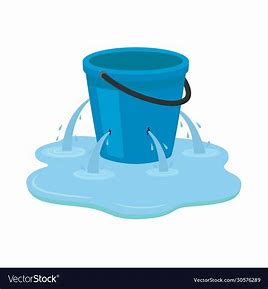
Insurance is not a burden. It protects one from the leaking bucket syndrome.
Without insurance, the returns on your investments can be wiped out by a single stroke of hospitalisation or car accident.
I’ll talk about the Indian scene.
MIS-SELLING
Misselling of insurance policies is a bigger problem than claim settlement. Insurance advisors and relationship managers promise the moon, and buyers are too lazy to read the entire offer or policy document.
CLAIM SETTLEMENT
India’s Insurance Regulatory and Development Authority (IRDAI) has recently tightened regulations. Cashless health insurance claims must be settled within three hours.
Most companies show a claim settlement ratio in the range of 95%-99%.
However, the unfortunate few denied a claim, citing suppression of vital health information or, for some other reason, fighting legal battles for years and ultimately getting meagre compensation, is a sad situation.
HIGH PREMIUMS
1. HEALTH INSURANCE
IRDAI recently issued guidelines to insurance companies to develop health insurance products for the elderly. However, the cost of such insurance may be prohibitive for the not-so-well-off sections. There is no ceiling on premium amounts.
They charge high amounts on riders rather than the primary policy premium. Riders are optional, but the increasing incidence of cancer, kidney failure and other critical illnesses pushes buyers to opt for it.
Buyers are also compelled to pay high premiums, given an insane rise in healthcare expenses.
Mental health is not adequately covered despite regulatory guidelines. Seeking mental health treatment carries a stigma and is not very common. Doctors’ charges vary widely, and insurance companies cannot estimate costs and fix premiums.
2. CAR INSURANCE
Car insurance premiums are increasing, but the facilities they offer have improved. When contacted online, they pick up the vehicle from the accident site, and a significant part of the claim is settled online after confirmation from empanelled garages. In the past, one had to pay the amount and then claim reimbursement.
Third-party insurance is compulsory for all to protect third parties from damages in an accident.
The no-claim bonus is transferable if you choose to switch insurers.
3. LIFE INSURANCE
Term plans are becoming popular among the young, given their low premiums.
Though advantageous to the buyer, salespersons are not pushing single-premium policies owing to low commissions on the product.
Unit-linked insurance plans are a mutual fund investment with an insurance cover. The charges (entry load, exit load and administrative expenses) are high. Some plans offer a choice to the investor to keep switching between equity and debt options. I’d advise clients to go for a mutual fund and a term plan for life insurance separately rather than combine the two.
4. HOME INSURANCE
Home insurance is not very popular in areas where earthquakes and floods do not occur frequently.
Banks insist on a home loan protection plan (HLPP) that promises to settle the outstanding loan in case the borrower dies. The plan also pays three EMIs if the borrower loses his job.
There are two options in a HLPP.
- Fixed cover where the company pays the total sum assured, but premiums are high. The survivors get the balance if the sum assured exceeds the outstanding loan amount.
- Reducing cover where the insurance company pays only the outstanding amount in the loan on a low premium.
However, one can buy a term life insurance plan at the same premium as reducing coverage and reap the benefits of a fixed cover. The family can settle the loan from the life insurance amount and keep the balance.
Banks exploit home buyers by compelling them to buy a recommended home loan protection policy, where they earn a hefty bancassurance commission. Most borrowers fall prey to manipulation, fearing a delay in the loan’s sanction. In addition, they combine the insurance premium with the EMI. The borrower may not notice an increase in premium in times of rising interest rates.
CONCLUSION
Insurance is a highly profitable business, as the company’s premiums on policies with no claims are pure profit.
Unfortunately, sales are driven by the commission agents or banks earn, often resulting in gullible buyers being pushed unsuitable products.
In my banking career, I opted out of roles where I was expected to drive insurance sales owing to a lack of ethics in the business.
 Creative Experiments and More
That was a very informative post. Sadly the customers get exploited in the interests of commission and business.
LikeLiked by 1 person
Check out beshak.org to buy insurance. It is comparatively better than policybazaar and other players.
LikeLiked by 1 person
Ohh that’s a great tip. Thank you so much. I had not heard of them before. I’ll check then out. Thanks again. Hope you have a great Sunday! 😃
LikeLiked by 1 person
Wishing you the same 👍
LikeLiked by 1 person
Insurance is so expensive here in Ireland, also! And because I have a mental illness and am at high risk of suicide, I can’t get life insurance. X
LikeLiked by 1 person
Ohh! But is there someone you want to nominate for life insurance? Health insurance is critical for you.
LikeLike
This was a very enjoyable read and I am glad that a person who knows as much as you do about this topic responded to my post. I am usually confused by insurance terminology, but I find it to be a necessary evil.
LikeLiked by 3 people
It is a necessary evil 😂 Thank you, Jim!
LikeLiked by 1 person