

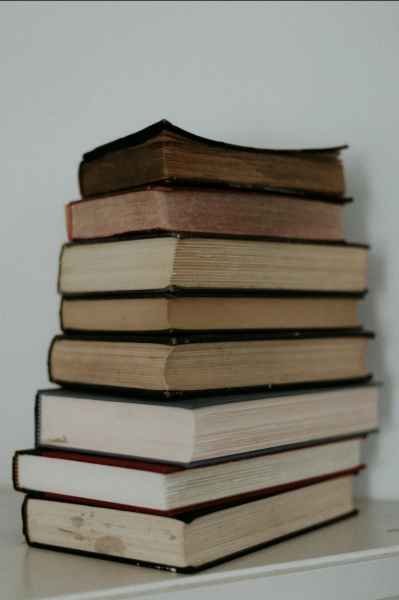
“Would you like to look at these books before I turn them over to a junk dealer?” Uncle was kind enough to ask when I visited him last.
The so-called junk, a term that didn’t sit well with me, belonged to my grandfather. I’d scanned through those books a couple of years ago, each holding a piece of my family’s history. They were not relevant to our digital age, but they were a part of my past.
On second thought, I decided to give the books another chance.
Grandpa was kind and loving to me, but a dyed-in-the-wool patriarch who was not so good to my mother, grandmother and aunts.
What made him whatever he was? What kind of inputs did he receive to form his personality?
“You can sell them, Uncle,” I said the next morning.
I was saddened to see the absence of literature. These were books of hard skills to suit his multifarious interests—alternative medicine, gardening, history, and law. These were not just books, but tools that he used to navigate his life and the lives of those around him.
I can reminisce that there were few self-help books in those days, and emotional and social intelligence concepts were developed much later.
However, literature has stories that speak of human relationships and emotions. It speaks of culture and its shortcomings. Fantasy fiction also compels you to consider alternatives to prevalent social systems and lifestyles.
Unfortunately, Grandpa missed out on the softer side of life. More unfortunate still was the lack of protesting voices to show him the other side, the side that values empathy, emotional intelligence, and equality in relationships.
It takes a single voice to lead with a divergent opinion, and then others decide whether to support or oppose it.
 Creative Experiments and More
I agree! Even if we are met with opposition initially! Do what is important, what makes sense even in the face of disagreement. If the intention is pure, the outcome is as well.
LikeLiked by 1 person
Fully agree 💯
LikeLiked by 1 person
An appropriate picture of those days when we did not question seniors’ behavior. It was the norm of the day. Grandpa is just like my FIL. Very well written.
LikeLiked by 1 person
Thank you, Indira!
LikeLike
That is the true picture of our shared culture a few generations ago. Hopefully things are changing for the better. Thanks for joining in Reena
LikeLike
Thank you, Sadje!
LikeLiked by 1 person
You’re welcome 😉
LikeLiked by 1 person