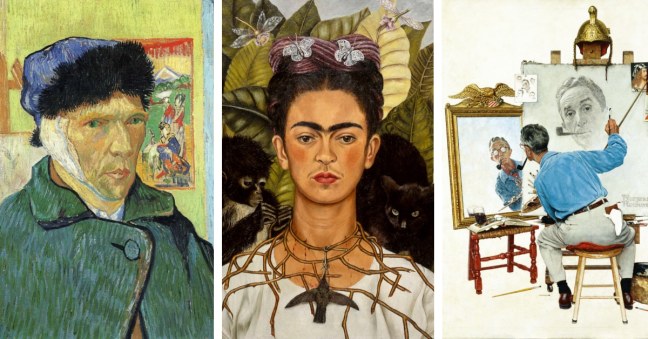
Self-portraits are easy and challenging for artists. They serve as a mirror to their souls, reflecting their innermost thoughts, feelings, and struggles. At the same time, depending on the artist’s intent, they can be a tool for self-promotion or self-exploration.
They don’t have to find a model but can be accused of presenting glamourised versions of the self.
I recall a female artist who landed into controversies about 40 years ago after doing male nudes in a then-conservative society. The society’s conservative values and gender norms led to a backlash against her work. Journalists asked her about her equation with the model rather than her art. She married her model, which made people pass on some more snide remarks, highlighting the societal discomfort with her unconventional choices.
She followed it up with self-nudes and was criticised for not staying true to her physical form. Her parents refused to visit any of the exhibitions.
I googled her name, but she has vanished from the Indian art scene.
Amrita Shergill, a renowned artist, also created self-portraits, albeit clothed. This demonstrates artists’ freedom to portray themselves as they wish, whether in fantasies, self-perceptions, or hidden aspects.
Ayn Rand once said about Dominique Francon, her female protagonist in “The Fountainhead,” “She is myself in a bad mood.”
Her biographer quickly pointed out the author’s and her characters’ physical differences. However, critics refuse to address the mental and emotional aspects.
The first challenge for an artist is to dissect yourself and decide on the kind of presentation. Of course, the intent matters – to reveal, conceal or for its shock value. The artist’s intent shapes the viewer’s interpretation, raising questions about their responsibility to their audience and the ethical implications of self-representation in art.
 Creative Experiments and More
Hopefully the paintings are in good taste.
LikeLiked by 1 person
That would depend on the artist’s self image.
LikeLiked by 1 person
True 😀
LikeLiked by 1 person
artists should be free to express themselves in whatever ways they wish, creatively. X
LikeLiked by 1 person
Ideally yes.
LikeLike