

We will discuss the religious significance of water in Hinduism today. Not all of these beliefs may be relevant in the present context.
Water is considered sacred as it purifies everything. Certain rivers are personified as Goddesses and worshipped. Dipping into these rivers is supposed to be a cleansing ritual (I seriously doubt if any river or ocean can wash away the kind of sins humans commit today).
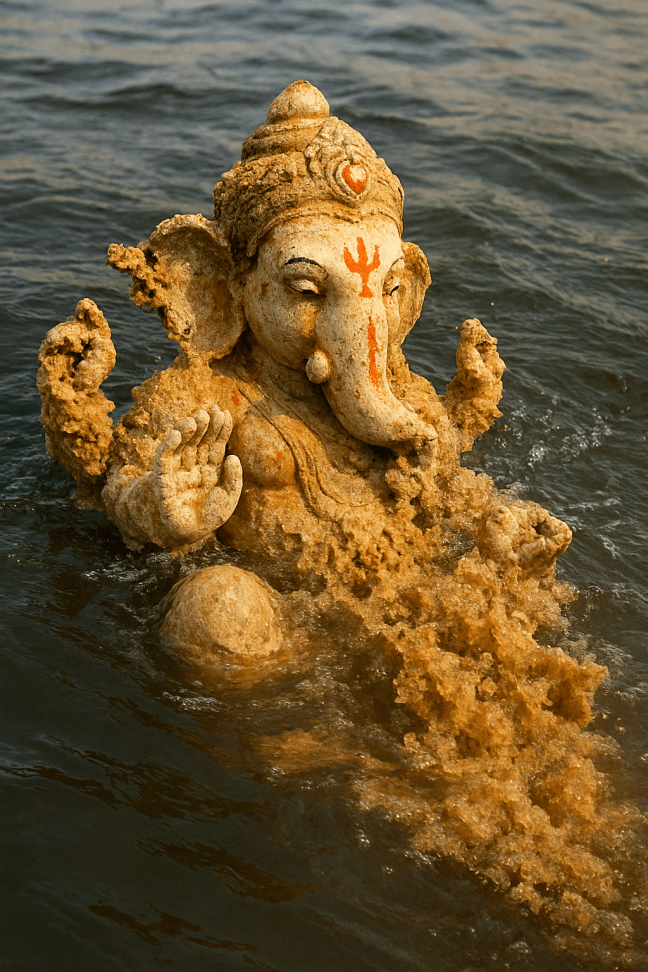
Today is the tenth day of the public celebrations of the Ganesha festival. The Ganesha idols are immersed in water after a 10-day celebration, signifying their return to the elements.
This ritual became a problem as fanciful idols were created from non-degradable materials. Huge idols placed in public places were taking up space at the bottom of water bodies, as they did not disintegrate immediately. Distressing images of partially dissolved idols were circulated to raise awareness among followers that this is not the best way to treat replicas of gods.
There are artificial tanks placed in public areas where idols up to 5 or 6 feet in height can be immersed. Art classes are held to help people create small eco-friendly idols from clay. Children are encouraged to participate so that the next generation is aware of and informed about ecological issues.
Water is a destroyer as much as it helps life, as indicated by cyclones and tsunamis.
Underwater life remains a mystery to humans. We are unaware of what happens in those depths, and our ignorance leaves us ill-prepared for the consequences.
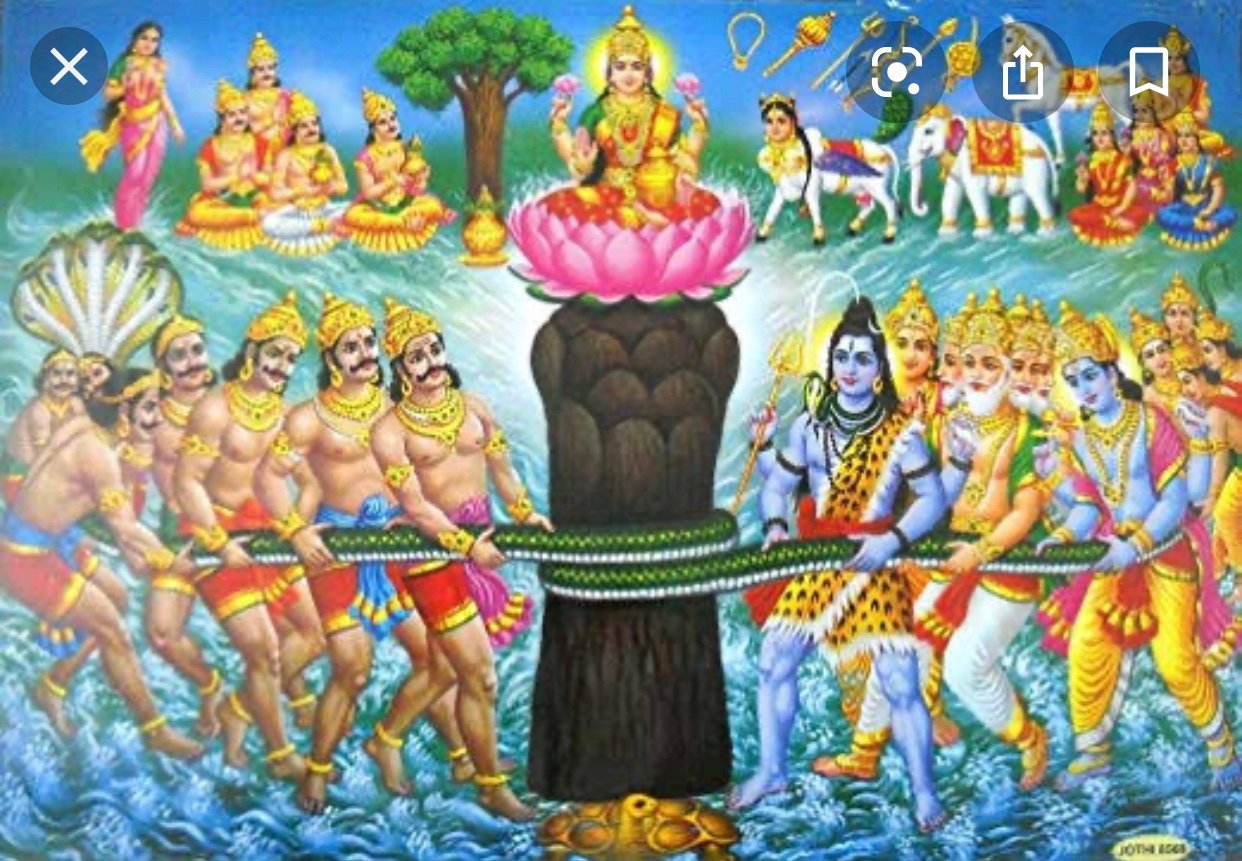
There is another story about the churning of the ocean by the gods to derive Amrit, the nectar of immortality.
What was done?
-Mount Mandara was used as the churning rod.
-Vasuki, the serpent king, served as the rope.
-Vishnu took the form of a giant tortoise to support the mountain from sinking.
How did they do it as per the scriptures?
Both sides pulled Vasuki back and forth, rotating the mountain and stirring the ocean. This cosmic effort released 14 treasures, including:
- Lakshmi (goddess of wealth)
- Kamadhenu (wish-fulfilling cow)
- Airavata (Indra’s elephant)
- Kaustubha (divine gem)
- Dhanvantari (divine physician holding Amrit)
- And a deadly poison called Halahala, which Lord Shiva consumed to save the universe, turning his throat blue (earning the name Neelkantha).
The items retrieved and the story could be symbolic. It could be a metaphor for transformation, struggle and the pursuit of enlightenment.
 Creative Experiments and More
I enjoy the Hindu god stories, but like most religious stories, I find them hard to believe. Thanks for sharing your thoughts on water, Reena.
LikeLiked by 1 person
There is a kind of disclaimer there which says these stories might be metaphors for a philosophical truth. Maybe they tried to make it easier for the masses to understand.
LikeLiked by 1 person