

An accomplished research scientist in the field of electronics once said,
“I understand Electronics completely, a bit of Physics and Maths. What I could never figure out is why two people like or dislike each other.”
It unveils the enigmatic nature of human relationships, a puzzle that continues to fascinate and intrigue us.
Electrons, by and large, function as per set patterns. They are supposed to govern the behaviour of the mass, which includes the human brain and body.
Human behaviour is governed by
- DNA
- Conditioning
- Response to expectations of self and others
Anomalies are possible everywhere, but exceptions end up proving the rule.
The four fundamental forces affect the behaviour of both the mind and mass, but the outcome is a consequence of willingness or inherent ability to be influenced.
When we say no to something, the rejection reflects our acceptance of some other principle that governs us. We say yes when the external influence aligns with our belief system.
But can it truly be different?
Yes, everything is susceptible to change, but the next force needs to be stronger. Change is an inevitable part of life, occurring when governing principles shift.
While I can apply electromagnetic, weak and strong nuclear forces to describe human behaviour, gravity (IMO) indirectly affects the mind, through the body.
I can walk because of my confidence in the gravitational force. Astronauts need to train for years for the spacewalk.
I do many other things because of my belief that certain governing principles will not change. Fantasy and mythological stories where a person endowed with special powers can change their form unnerved me. How can anyone protect themselves against such deception? But AI can now clone a human voice, and it will complicate our existence and security systems further.
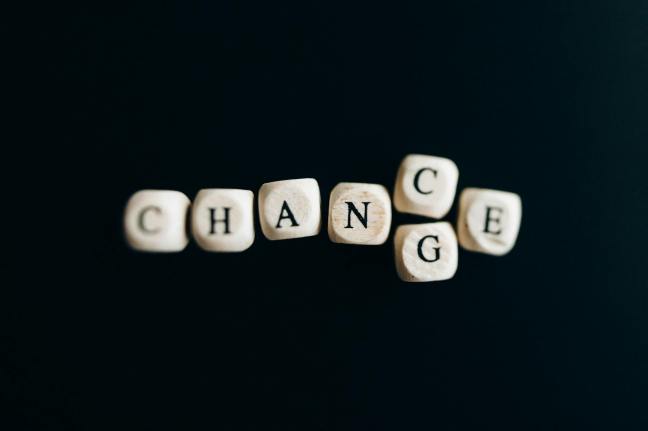
Change, in its myriad forms, is an inescapable reality. It is not a matter of choice or a problem to be solved, but a force to be reckoned with.
 Creative Experiments and More
I love how you stretch the language of physics into the territory of human connection. Treating DNA, conditioning, and belief as forces of alignment—and then asking whether someone saying “no” reflects resonance with another principle—feels less like psychology and more like harmonics in practice.
Especially resonant is your recognition that change doesn’t happen by argument, but when a stronger field arrives. It reframes resistance not as stubbornness, but as coherent self-trust born when something else aligns more deeply.
Thank you for linking electrons to empathy, and reminding us that behavior—both mechanical and human—is shaped not by mandate, but by what we choose to phase-lock with.
LikeLiked by 2 people
Thanks for the detailed analysis of the post!
LikeLiked by 1 person
Informative and thought-provoking post, Reena. Initially, there is always opposition to change. Later, we accept or reject it based on our convenience, or when we are forced to accept it.
LikeLiked by 1 person
You put it so succinctly and correctly.
LikeLiked by 1 person
Thanks.
LikeLiked by 1 person
Thanks for sharing this very informative piece, Reena which makes me think that change might be the strongest force in the universe. Change is difficult for most people because humans are naturally wired to seek comfort and stability and change often disrupts these patterns. The brain’s tendency to prefer routine and the fear of the unknown, along with potential losses associated with change, can create resistance.
LikeLiked by 2 people
Keeping in line with the thought wavelength of the day, I happened to attend a webinar on Micro-aggression. It mentioned preference for routine and stereotyping as a cause of Micro-aggression. In short, the aggressors attack anything that looks different.
LikeLiked by 2 people