

There are murderers in the world because the victims are bad enough to incite hatred or bring out the worst in others.
There are oppressed people in the world because they submit to an oppressor.
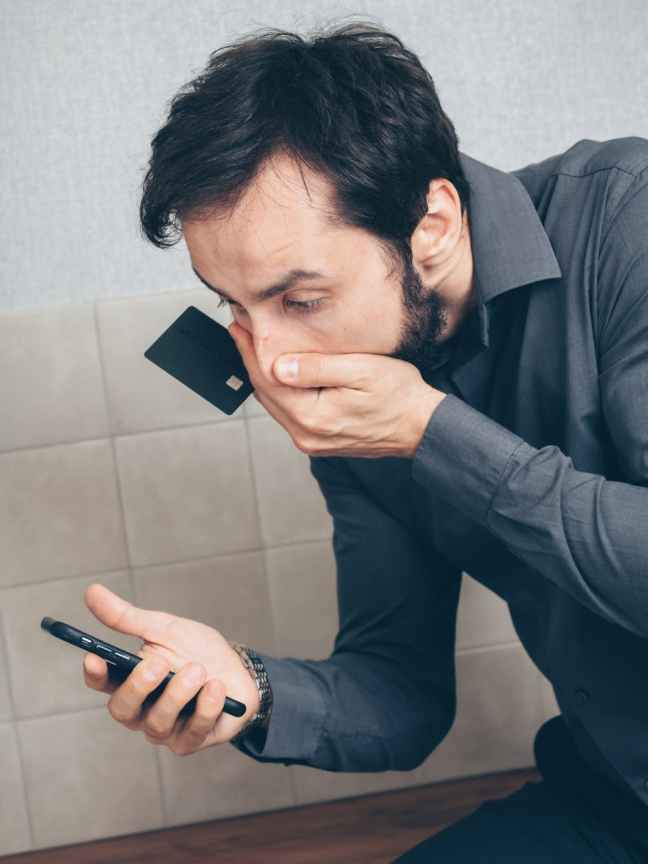
Frauds and scams have increased since we began living our lives digitally, so technology is often blamed.
The guiltiest people in the world are those who have the power to act, but choose not to.
Some of the above statements sound extreme, but if you dig down to the core, you may find a semblance of truth.
While a murder victim or the oppressed may not have had a choice, a fraud victim in most cases has ‘responded or reacted’ in some way to a call or message from a miscreant.
Can we shut ourselves away from communication?
Of course, not.
However, the need for awareness, financial education, and discretionary caution cannot be overstated.
THROWING CAUTION TO THE WINDS
- Why do we believe social media content that is not backed by authorities?
- Why do we entertain the opinion of pitching shops set up on YouTube or other apps?
- Why does greed for a windfall override caution?
- Why do we let fear rule when receiving a warning or threat about accounts being blocked or penalised?
- Why do we not take the trouble to cross-check facts?
- Why do we not educate children about the pitfalls before they sign up for gaming apps or similar stuff?
I wonder how many people continue to fall victim to the same scam despite it being circulated on social media.
HACKING
Hacking is different. We are not responsible for hacking, but some caution can be exercised to prevent it.
Use mobile data or a mobile hotspot when conducting online financial transactions, rather than relying on open Wi-Fi systems. Free Wi-Fi offered in public places should be avoided for financial transactions.
UNIFIED PAYMENT INTERFACE (UPI)
UPI is an app-based payment system developed by the National Payments Corporation of India. Its popularity has surpassed that of cards and other payment options. To make a payment, the user just has to scan a QR code.
There are options to use it in remote areas where internet connectivity is poor, or users cannot access smartphones.
- One can delegate spending power to a family member, like we do with add-on cards.
- By scanning a QR code, it is also possible to withdraw cash from an ATM without a card.
- Credit cards can be linked to UPI, providing access to credit without the need to carry the card.
Although the technology has gained widespread adoption, it has drawbacks. Several people fell victim to a scam in which they were asked to scan a QR code to receive a payment. Scanning a code is the act of sending money, not receiving it. They were shocked to discover that money was being withdrawn from their account.
MATRIMONIAL FRAUDS
This involves a man in another country posing as a suitor on a matrimonial site, gaining trust and then asking for money on the pretext of an emergency. Some women parted with millions of rupees on the assumption that they would soon be married.
The most familiar victims are single women above the age of 40. The fraudsters have done video calls with a child by their side, posing as a widower or divorcee.
OTHERS
A few others are
- Receiving a cash-on-delivery parcel for something they have not ordered. They may be asked to share an OTP to cancel the order. Some people paid for it, believing a family member ordered something.
- Digital arrest is illegal, but criminals posing as officials from the Income Tax, Enforcement Directorate, or police have feigned it. During the so-called arrest, victims are asked to transfer funds to designated accounts in exchange for being absolved of the fake charge.
- International calls from unknown numbers can be a source of trouble when picking up a call.
The culprits are greed, misplaced trust and ignorance.
 Creative Experiments and More
Hi Reena, an excellent post. Thank you for sharing this information.
LikeLiked by 2 people
Thanks for reading a long post, Robbie! 😀
LikeLiked by 1 person
Thanks for the information and insights
LikeLiked by 1 person
Thank you, L.G.!
LikeLike
Great post, Reena as we all need to be careful all of the time. Being ignorant of the scams is what opens up the doors for the scammers to attack us. Thanks for sharing your advice.
LikeLiked by 1 person
Much appreciated, Jim – both the topical prompt and the encouraging comment.
LikeLiked by 1 person